
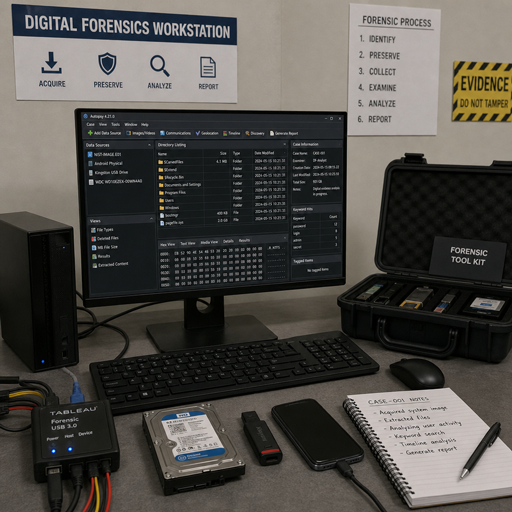
Open-source forensics kits bring together the forensic tools, workflows, and utilities investigators use to collect, preserve, examine, and explain digital evidence. They can support cyber forensics, internal security reviews, incident response, data recovery, and broader forensic investigations without locking teams into a single commercial platform. Used well, they give analysts flexibility, transparency, and repeatable methods for turning raw devices, files, logs, and memory captures into defensible findings.
What are open-source forensics kits?
Open-source forensics kits are collections of forensic software and supporting utilities that are available for inspection, modification, and community-driven improvement. Instead of being one single application, a kit may include tools for disk imaging, file system analysis, deleted file recovery, timeline building, memory analysis, network traffic review, malware triage, hashing, reporting, and evidence handling. The goal is not simply to “find files,” but to help investigators preserve evidence integrity, analyze activity, and document conclusions in a way that can be reviewed by others.
The value of open-source forensics kits comes from their transparency. Analysts can see how tools work, validate methods, and combine utilities into a workflow that fits the investigation. That matters because forensic analysis depends on trust: a result is only useful if the process behind it can be explained and repeated.
At the same time, open source does not automatically mean simple or risk-free. Many tools require technical knowledge, careful configuration, and disciplined documentation. A strong kit is less about downloading every utility available and more about selecting reliable tools, testing them, and using them consistently.
Why open-source kits matter in modern investigations
Digital evidence now appears across laptops, phones, cloud accounts, removable drives, logs, email systems, chat platforms, browsers, and network devices. Even routine incidents can involve multiple evidence sources and competing timelines. Open-source forensics kits help teams respond to that complexity with flexible, modular capabilities.
For a security team, open-source forensic tools can support quick triage after a suspected compromise. For a legal or compliance team, they may help preserve and review files in a controlled way. For researchers and students, they provide a practical path into cyber forensics without requiring immediate investment in expensive platforms.
Open-source options also encourage skill development. Analysts are often closer to the underlying process because many tools expose command-line options, logs, modules, and artifacts directly. That visibility can deepen understanding of file systems, operating system behavior, browser artifacts, timestamps, and network evidence.
However, open-source kits are not a shortcut around forensic discipline. Evidence still needs to be handled carefully, documented thoroughly, and interpreted conservatively. The kit supports the investigator; it does not replace judgment.
Core components of a practical forensic toolkit
A useful kit should cover the main phases of an investigation: acquisition, preservation, analysis, recovery, correlation, and reporting. Different cases require different combinations, but most forensic investigations benefit from a balanced set of capabilities.
Evidence acquisition and preservation
Acquisition tools help create forensic images, collect files, capture volatile data, and preserve the original source. This is one of the most sensitive stages because mistakes can alter evidence or make later analysis harder to defend. A sound workflow usually includes write protection where appropriate, verified copies, hashes, chain-of-custody notes, and clear labeling.
Open-source forensic software can assist with disk imaging, logical collection, and hashing. Analysts should verify that the tool supports the media type, file system, and acquisition method required for the case. They should also test their process before using it in a high-pressure incident.
File system and artifact analysis
Once evidence has been acquired, file system analysis helps investigators understand what exists, what was deleted, what changed, and when activity occurred. This may include reviewing directory structures, metadata, browser history, registry-like artifacts, application data, email stores, logs, shortcuts, archives, and system-generated files.
Good forensic analysis does not treat one artifact as the whole truth. Timestamps can be confusing, logs may rotate, and user activity can be represented in several places. A kit should help analysts compare artifacts and build a more complete view rather than rely on a single clue.
Data recovery tools
Data recovery tools are often part of open-source forensics kits because deleted, damaged, or partially overwritten files can be important to an investigation. Recovery may involve carving files from unallocated space, identifying file signatures, reconstructing fragments, or extracting content from damaged storage.
These tools are helpful, but recovered data must be interpreted carefully. A carved file may lack original path information, timestamps, or context. Analysts should separate what the tool recovered from what can actually be proven about how, when, or by whom the file was used.
Memory, malware, and live response utilities
Some investigations depend on volatile evidence that may disappear when a system shuts down. Memory analysis can reveal running processes, network connections, injected code, credentials in memory, suspicious modules, and signs of malware behavior. Live response utilities can also gather system state, active sessions, and current network activity.
This area of cyber forensics requires particular care. Collecting live data can change the system, and some malware may react to analysis activity. Teams should decide in advance when live capture is appropriate, what commands are permitted, and how the results will be documented.
Network and log analysis
Network evidence can show communication patterns, suspicious connections, data movement, authentication attempts, and lateral movement. Open-source tools can parse packet captures, review firewall logs, inspect DNS activity, analyze proxy records, and correlate event logs.
The challenge is volume. Logs and packets can become overwhelming quickly, especially when several systems are involved. A strong kit should include tools that filter, normalize, search, and visualize data so analysts can move from noise to meaningful patterns.
The practical benefits of open-source forensic software
Open-source forensic software is popular because it gives teams control. Instead of relying entirely on vendor-defined workflows, investigators can create processes suited to their environment, evidence types, and skill level. That flexibility can be especially valuable for small teams, labs, universities, consultants, and security groups that need adaptable capabilities.
Key benefits include:
- Transparency: Analysts can inspect methods, review documentation, and better explain how a result was generated.
- Flexibility: Tools can be combined into custom workflows for disk, memory, network, and log analysis.
- Cost accessibility: Open-source options can reduce entry barriers, especially for training and internal investigations.
- Community knowledge: Many projects benefit from shared testing, documentation, scripts, and peer discussion.
- Automation potential: Command-line utilities and scripts can support repeatable analysis steps.
- Tool diversity: Teams can choose specialized utilities rather than depend on one broad platform for every task.
The biggest advantage may be educational. Analysts who work with open-source forensic tools often develop a stronger understanding of what the tool is doing and why a finding matters. That makes them better prepared to explain uncertainty, limitations, and alternative interpretations.
Still, open source should be treated as part of a professional process. Teams need version control, validation, training, and clear procedures. A powerful tool used casually can create more confusion than clarity.
How should teams choose the right open-source forensics kits?
Teams should choose open-source forensics kits by matching tools to their investigation types, evidence sources, skill levels, documentation needs, and validation requirements. The best kit is not the largest collection of utilities; it is the one analysts can use correctly, explain clearly, and repeat reliably. A smaller, tested toolkit is usually stronger than a crowded folder of unfamiliar tools.
Start with the cases you actually handle. A corporate incident response team may prioritize endpoint artifacts, logs, memory, and network traffic. A data recovery specialist may need file carving, damaged media handling, and storage analysis. A training lab may focus on broad coverage and repeatable exercises.
A practical selection checklist can help:
- Evidence coverage: Does the kit support the operating systems, file systems, devices, logs, and formats you commonly encounter?
- Preservation features: Can it hash, verify, label, and protect evidence throughout the workflow?
- Documentation quality: Are usage notes, options, limitations, and output formats clear enough for analysts to explain?
- Repeatability: Can the process be scripted, logged, or reproduced by another trained person?
- Output clarity: Does the tool produce results that can be reviewed, exported, and cited in reports?
- Community and maintenance: Is the project active enough to be trustworthy for your use case?
- Training burden: Can your team realistically learn and maintain competence with the tool?
- Integration: Does it work with your existing case management, storage, lab, or reporting practices?
Teams should also define a baseline toolkit and an experimental toolkit. Baseline tools are validated and approved for active investigations. Experimental tools can be tested, compared, and documented before they become part of official workflows.
Building a defensible forensic workflow
Forensics is as much about process as it is about tools. A result from excellent forensic software can still be challenged if the workflow is careless, undocumented, or inconsistent. The safest approach is to define a repeatable path from intake to reporting.
A basic workflow might look like this:
- Clarify the objective. Define what question the investigation needs to answer, such as whether data was accessed, malware executed, or files were deleted.
- Identify evidence sources. List devices, accounts, logs, storage media, network captures, and relevant time ranges.
- Preserve before analyzing. Create verified copies when possible and avoid working directly on original evidence.
- Record chain of custody. Document who handled evidence, when it changed location, and what actions were taken.
- Run controlled analysis. Use tested tools, capture commands or settings, and preserve logs of analyst activity.
- Correlate findings. Compare artifacts across sources instead of relying on one event or timestamp.
- Document limitations. Note missing data, tool constraints, uncertainty, and assumptions.
- Report clearly. Separate observed facts, analysis, and conclusions so readers can follow the reasoning.
This structure works whether the investigation is small or complex. It keeps the analyst focused on answering the investigative question rather than chasing every artifact. It also helps reviewers understand how the conclusion was reached.
Open-source and commercial tools can work together
Open-source does not have to compete with commercial forensic software. Many teams use both. Commercial suites may provide polished interfaces, vendor support, integrated reporting, and broad case management features. Open-source tools may offer deeper transparency, niche capabilities, scripting options, or faster experimentation.
A blended approach can be especially effective when results need confirmation. If two independent tools parse an artifact in the same way, confidence may increase. If they disagree, the analyst has a reason to inspect the source data and understand the difference.
|
Need |
Open-source strength |
Commercial strength |
|---|---|---|
|
Learning and experimentation |
Transparent methods and flexible workflows |
Guided interfaces and structured training materials |
|
Specialized analysis |
Focused utilities for specific artifacts or formats |
Broader integrated coverage in one environment |
|
Reporting |
Custom exports and analyst-controlled documentation |
Built-in templates and case management features |
|
Validation |
Inspectable processes and repeatable scripts |
Vendor documentation and support channels |
|
Budget planning |
Lower software acquisition barrier |
Predictable support and enterprise packaging |
The right balance depends on the organization. A small lab may begin with open-source forensics kits and add commercial tools as needs grow. A mature enterprise may already have a commercial platform but still keep open-source utilities available for verification, research, and specialized analysis.
Common investigation scenarios
Open-source forensic tools can support a wide range of practical scenarios. The details change from case to case, but the investigative mindset remains consistent: preserve the source, collect relevant artifacts, test findings, and document the path from evidence to conclusion.
Incident response triage
After a suspected intrusion, analysts may need to determine what happened quickly without damaging evidence. A kit might help collect volatile system data, review running processes, inspect persistence locations, examine logs, and identify suspicious network connections. The immediate goal is often to understand scope: which systems are affected, what activity occurred, and what evidence should be preserved for deeper analysis.
Speed matters, but so does restraint. Teams should avoid running unnecessary commands or making changes that complicate later review. A prebuilt triage plan helps analysts act consistently under pressure.
Insider risk and policy investigations
In workplace investigations, digital evidence may include file access, removable media usage, email activity, downloads, browser artifacts, cloud sync records, and system logs. Open-source forensic software can help organize and examine these materials, but the human context matters. Technical findings should be framed carefully and only within the limits of the evidence.
For example, the presence of a file does not always prove intent, and a timestamp may reflect system behavior rather than direct user action. Good reporting makes those distinctions clear.
Data recovery and damaged files
When files are deleted, corrupted, or stored on failing media, data recovery tools may help retrieve useful content. Open-source options can search for known file signatures, rebuild directory information where possible, and extract fragments for review. This can be valuable after accidental deletion, ransomware activity, drive damage, or improper formatting.
Recovery is not the same as full restoration. Investigators should explain whether a file was recovered with metadata, partially recovered, or carved without original context. That clarity prevents recovered data from being overinterpreted.
Malware and suspicious file review
Malware-related analysis may involve reviewing suspicious executables, scripts, memory captures, persistence mechanisms, network indicators, and system changes. Open-source tools are often useful for extracting strings, inspecting file properties, comparing hashes, reviewing process behavior, and building timelines around execution.
This work should be done in a controlled environment. Analysts should avoid opening suspicious files on regular workstations and should document each step so another reviewer can understand the basis for the conclusion.
What risks should investigators avoid?
Investigators should avoid altering original evidence, relying on unvalidated tools, overclaiming conclusions, ignoring chain of custody, and treating tool output as unquestionable fact. Open-source forensic tools are powerful, but they require disciplined use. The safest findings are those supported by preserved evidence, repeatable methods, and cautious interpretation.
One common risk is tool overload. Installing every available utility can create confusion, inconsistent outputs, and undocumented methods. A curated kit is easier to train, validate, and defend.
Another risk is weak documentation. If an analyst cannot explain which tool was used, what settings were selected, what data source was examined, and how the result was preserved, the finding becomes less useful. Documentation should begin at collection, not at the report-writing stage.
Teams should also avoid assuming that a tool’s output is complete. Parsers can miss artifacts, interpret fields differently, or fail on unusual formats. When a finding matters, compare it with the source data or corroborating artifacts whenever possible.
A simple risk-control checklist includes:
- Work from copies, not originals, whenever feasible.
- Record hashes before and after acquisition or transfer.
- Keep tool versions, commands, configuration files, and logs.
- Validate new tools on known test data before operational use.
- Separate confirmed facts from analyst interpretation.
- Preserve failed attempts and errors when they affect the investigation.
- Review critical findings with a second qualified person when possible.
- State uncertainty plainly instead of forcing a conclusion.
These habits make forensic investigations more reliable and easier to defend. They also help teams improve over time because each case becomes a source of lessons for the next one.
Reporting findings in plain language
A forensic report should not read like a raw tool export. Decision-makers need to understand what was examined, what was found, why it matters, and what the evidence does or does not prove. Technical detail is important, but it should support the narrative rather than bury it.
A clear report often includes the investigation objective, evidence sources, acquisition method, tools used, key findings, timeline, limitations, and conclusion. Screenshots, hashes, tables, and appendices can help, but they should be organized around the questions the investigation was meant to answer.
Plain language matters because forensic analysis often reaches readers who are not analysts. Legal teams, managers, clients, auditors, and system owners may all need to act on the findings. A strong report translates technical evidence into careful, accurate explanations without exaggeration.
Training turns tools into capability
Open-source forensics kits are most useful when teams invest in training. Analysts need to understand file systems, operating system artifacts, evidence preservation, log formats, scripting basics, and investigative reasoning. Without that foundation, even excellent forensic software can be misused.
Training does not have to begin with complex cases. Teams can create small lab images, practice recovering deleted files, compare timestamps, parse browser artifacts, inspect memory samples, and write short reports. Repetition builds confidence and reveals where procedures are unclear.
Peer review is also valuable. When analysts explain their process to one another, they learn to defend assumptions, catch mistakes, and improve documentation. Over time, the team develops not only a toolkit but a shared standard for careful work.
A practical path forward
For organizations building their first toolkit, the best approach is gradual and deliberate. Start with the evidence sources most relevant to your environment, then choose tools that support those needs. Document how each tool is used, test it with known data, and keep the workflow simple enough that analysts can repeat it under pressure.
As capability grows, add specialized tools for memory, malware, cloud artifacts, network analysis, and advanced data recovery. Review the kit regularly and remove utilities that are outdated, redundant, or poorly understood. A maintained toolkit is safer than a large but neglected one.
The broader lesson is simple: open-source forensics kits can make forensic analysis more accessible, transparent, and adaptable, but the real strength comes from disciplined practice. When teams combine reliable forensic tools with careful preservation, thoughtful interpretation, and clear reporting, they are better prepared to handle digital evidence with confidence.
